Author: Victor Noah

  • NCV Courses at TVET Colleges (2026 Application Requirements)

    NCV Courses at TVET Colleges (2026 Application Requirements)

    A National Certificate Vocational (NCV) is a high-intent, 3-year practical qualification running from NQF Level 2 to Level 4. It allows students to gain industry-specific workforce skills directly after passing Grade 9.

    If you finished Grade 9 or you left school without a matric certificate, you are not stuck. There is a way forward that does not involve sitting at home. The National Certificate Vocational, which everyone calls NCV, is your path to real skills and a real job.

    TVET colleges across South Africa offer these programmes. You can find them in Gauteng, Mpumalanga, the Eastern Cape, the Western Cape, KwaZulu-Natal, the Northern Cape, the Free State, Limpopo, and North West. This guide covers everything you need to know about NCV courses at TVET colleges. No fluff. No confusing language. Just straight answers.

    National Certificate Vocational Courses

    The National Certificate Vocational is a qualification that sits on the National Qualifications Framework (NQF). It covers Levels 2, 3, and 4.

    • NCV Level 2 matches Grade 10.
    • NCV Level 3 matches Grade 11.
    • NCV Level 4 matches a full Matric certificate (NQF Level 4).

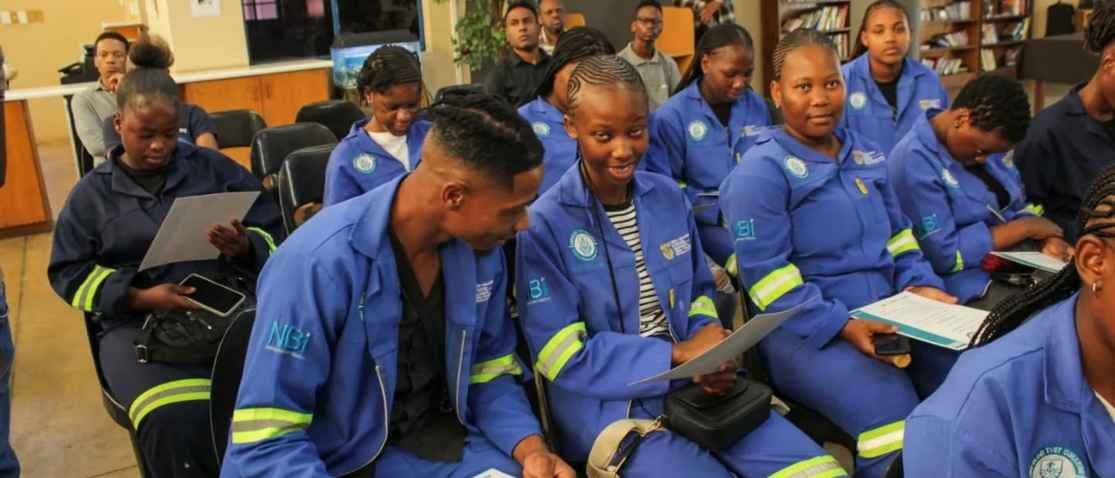
    The way you learn in National Certificate Vocational courses is different from high school. In high school, you mostly memorize facts for exams. In NCV, you do actual work. You spend time in workshops and practical simulation sessions. If you study electrical work, you wire circuits. If you study hospitality, you cook meals. If you study IT, you build computer hardware or write code.

    The government designed these National Certificate Vocational courses because South Africa needs skilled workers. We need people who can build, fix, manage, and deliver. University degrees are fine for some people, but the country runs on artisans, technicians, and administrators. When you complete these courses, you walk away with a qualification that employers trust and skills you can use on day one of your job.

    NCV Level 2 to 4 Courses

    You cannot skip levels when you study NCV courses. Each level takes one full year of full-time study. You must pass your current level before moving to the next.

    • NCV Level 2: This is where everyone starts. This level assumes you have basic reading, writing, and maths skills. You learn the foundations of your chosen field. The work is introductory, but you still get practical exposure from day one.
    • NCV Level 3: This level builds on everything from Level 2. The tasks get harder, and you work more independently. Your lecturers expect you to solve technical problems and take on bigger practical projects.
    • NCV Level 4: This is your final year where everything comes together. When you pass Level 4, you have completed the programme successfully and receive your full National Certificate Vocational. You can then choose to enter the job market or apply to a University of Technology.

    Note: Even if you passed Grade 10 or Grade 11 at a normal high school, you must still start at NCV Level 2. This is because high school subjects do not cover the foundational vocational and practical skills taught in Level 2, meaning no exemptions are granted for prior school grades.

    TVET College Vocational Programmes

    When you look at TVET college vocational programmes, you need to understand that they are structurally different from the older NATED (Report 191) courses. The NATED N1 to N3 engineering programmes have officially been phased out by the government, paving the way for NCV and QCTO-accredited occupational qualifications as the future of vocational training.

    TVET college vocational programmes focus heavily on giving you the exact skills employers need right now, rather than outdated textbook theory. The way these programmes work is simple: you spend roughly 40 percent of your time on theory and 60 percent on practical work in simulated or real workplace environments.

    Every NCV TVET college vocational programme includes three compulsory fundamental subjects that everyone must take from Level 2 through to Level 4:

    1. English First Additional Language
    2. Life Orientation
    3. Mathematics OR Mathematical Literacy

    Note: Pure Mathematics is usually compulsory if you choose an engineering stream, while Mathematical Literacy is for business and services streams.

    Alongside these three fundamentals, you will take four specialized vocational subjects. These are the subjects that teach you your actual trade or profession. If you choose a business pathway, you will learn modules like accounting and office management. If you choose engineering, you will study materials, design, and construction methods. If you choose IT, you will focus directly on programming, systems development, and computer hardware.

    NCV Courses List

    The ncv courses list changes slightly from college to college. Some colleges offer everything. Others specialise in certain areas. But most TVET colleges across South Africa offer the same core programmes.

    Here is the full NCV courses list by category.

    CategoryAvailable NCV Courses
    EngineeringEngineering and Related Design
    Civil Engineering and Building Construction
    Electrical Infrastructure Construction
    Mechanical Engineering
    BusinessOffice Administration
    Finance Economics and Accounting
    Management
    Marketing
    Business Management
    Information TechnologyInformation Technology and Computer Science
    Systems Development
    Computer Hardware
    ServicesTourism
    Hospitality
    Primary Health
    Safety in Society
    Transport and Logistics
    AgriculturePrimary Agriculture
    Farming Management

    Before you choose from the ncv courses list, think honestly about what you enjoy doing. Do not pick something because your friend is doing it. Do not pick something because you heard it pays well. You will spend three years on this. Make sure you care about it.

    Also check with your local TVET college for their specific ncv courses list. Some colleges have partnerships with local industries and offer programmes that others do not. For example, a college near a harbour might offer specialised logistics courses. A college near a game reserve might offer specialised tourism courses.

    TVET NCV Qualifications

    When you complete your studies, you receive TVET NCV qualifications at NQF Level 4. This is the exact same NQF level as a traditional National Senior Certificate (Matric). While the government treats them as equals on paper, TVET NCV qualifications offer a distinct advantage in the job market because they prove you possess practical, job-ready skills rather than just theoretical book knowledge.

    An employer looking at your CV will see that you have already spent hours in specialized workshops, completed real-world projects, and solved practical problems. Many technical employers actively prefer TVET NCV qualifications over a standard academic Matric because they do not have to train you from scratch. You already understand the industry tools and environments, allowing you to contribute to the workplace from day one.

    TVET NCV qualifications are also recognized for further academic studies. However, entry is primarily focused on Universities of Technology and comprehensive universities rather than traditional academic universities.

    Each institution and faculty sets its own specific minimum percentage requirements for your fundamental and vocational subjects, which you must check before applying.

    To apply for higher education options using an NCV Level 4 qualification, specific statutory pass marks must be achieved. These requirements differ depending on the targeted qualification type.

    Minimum NCV Level 4 University Pass Requirements

    Qualification Type TargetRequired Marks in Fundamentals
    (English, Life Orientation, Maths/Maths Lit)
    Required Marks in Vocational Subjects
    (Your 4 Core Specialised Subjects)
    Higher Certificate40% in English
    40% in Life Orientation
    30% in Maths or Maths Lit
    At least 50% in all 4 vocational subjects
    DiplomaAt least 50% in all 3 fundamental subjects (including English)At least 60% in 3 of the compulsory vocational subjects
    Bachelor’s DegreeAt least 60% in all 3 fundamental subjects (including English)At least 70% in all 4 compulsory vocational subjects

    Note: Meeting these statutory minimum marks allows you to apply, but individual Universities of Technology or high-demand faculties may set higher entry criteria based on space availability.

    Entry Requirements for NCV Courses

    Before you apply, you need to know whether you qualify. Here is a breakdown of the official entry requirements for NCV courses.

    NCV Courses With Grade 9 Entry

    The fundamental rule for NCV entry is simple: you must have successfully passed Grade 9. You do not need a Matric certificate, Grade 10, or Grade 11. However, while Grade 9 is the legal minimum across South Africa, entry is competitive. Individual colleges often set their own internal pass levels for English and Mathematics depending on the number of available spaces. You must bring your official, certified Grade 9 report card or certificate when you apply.

    If you failed Grade 9, you do not qualify for NCV and must look into Community Education and Training (CET) colleges or adult basic education programs first.

    TVET College Requirements for NCV Level 2

    To secure admission into NCV Level 2, you must meet these criteria:

    • Age Requirement: You must be at least 16 years old, turning 17 in the year of registration. Public TVET colleges generally do not admit younger students due to workshop safety regulations.
    • Academic Record: A certified copy of your passed Grade 9 (or higher) school report.
    • Identification: A certified copy of your South African ID or birth certificate.
    • Proof of Residence: A unique document showing your home address. If it is not in your name, you must provide a signed police affidavit from the landlord or parent whose name appears on the document.

    Minimum Requirements for NCV Engineering

    While the baseline entry requirement remains a Grade 9 pass, the engineering stream is highly demanding. To be accepted into Engineering and Related Design, Civil Engineering, or Mechanical Engineering, colleges strictly require a strong pass in Grade 9 Mathematics and Natural Sciences (typically 40% to 50% minimum).

    Public TVET colleges do not offer short bridging courses to make up for failed school marks. If you do not meet the math criteria, you will be directed toward the Business or Services streams instead. Engineering requires heavy practical and theoretical calculations, so having a solid foundational background in math is vital.

    Studying TVET Courses Without Matric

    You absolutely can study TVET courses without Matric. The entire purpose of the NCV stream is to provide an alternative, high-quality pathway for individuals who left the schooling system early. You do not need a Matric certificate to start, nor do you need one to finish. The NCV Level 4 qualification itself serves as a registered Matric equivalent.

    NCV Requirements for Grade 10 and 11 Dropouts

    If you left school after Grade 10 or Grade 11, you easily meet the entry criteria because you have exceeded the minimum Grade 9 requirements. You must bring your highest grade school report when applying.

    Please note that having a higher school grade does not allow you to skip levels. Even if you passed Grade 11, you must still start at NCV Level 2. This is because high school academic subjects do not cover the specific, foundational vocational workshop skills required to progress to Levels 3 and 4.

    Is NCV Level 4 Equal to Matric?

    This question comes up constantly. Let me give you a clear answer and then break down the details.

    Yes, on the NQF framework, ncv level 4 is equal to matric. Both sit at NQF Level 4. The government recognises them as equivalent qualifications.

    But the real world answer is more complicated. Let me show you in a table.

    Comparison PointNCV Level 4Matric Certificate
    NQF LevelLevel 4Level 4
    Government recognitionYesYes
    University admissionSome universities acceptMost universities accept
    Employer preferenceDepends on the jobDepends on the job
    Practical skillsStrongWeak
    Theory knowledgeModerateStrong
    Time to complete3 years3 years (Grade 10 to 12)
    Entry requirementGrade 9Grade 9

    For people asking is ncv level 4 equal to matric for jobs, most employers say yes. In fact, many employers in trades and technical fields prefer NCV because you come out ready to work.

    For people asking is ncv level 4 equal to matric for university, the answer is sometimes yes. You need to check with each university individually. We cover that next.

    Can I Go to University With NCV Level 4?

    The answer is yes, but not automatically. Can i go to university with ncv level 4 depends on which university and which degree you want.

    Some universities accept NCV Level 4 for admission into certain diploma and degree programmes. UNISA is one example. Many Universities of Technology also accept NCV graduates.

    For specific information on ncv level 4 university entry requirements, here is what you generally need. You need at least 50 percent or 60 percent in your fundamental subjects of English and Mathematical Literacy. Some programmes also require specific vocational subjects at a certain level. You need to have completed all three levels successfully, not just Level 4. You cannot just do Level 4 and expect university admission.

    The best advice is to decide early. If you know you want to go to university, choose your NCV subjects carefully to match the degree you want. And work hard from Level 2. Do not wait until Level 4 to start caring about your marks.

    Another pathway is to complete NCV Level 4, work for a few years, and then apply to university as a mature student. Mature student entry requirements are different and often more flexible.

    Difference Between NCV and QCTO Qualifications

    You will hear about two main types of qualifications at TVET colleges. The first is NCV, which stands for National Certificate Vocational. The second is QCTO qualifications, which are occupational qualifications designed by the Quality Council for Trades and Occupations.

    Both are current and recognised. Both lead to jobs. But they work differently, and you need to understand the difference so you can choose the right path for yourself.

    NCV qualifications are full programmes that take three years to complete from Level 2 to Level 4. You study a broad range of subjects including fundamentals like English and Maths, plus vocational subjects in your chosen field. When you finish, you have an NQF Level 4 certificate that is equal to matric.

    QCTO qualifications are different. They are shorter and more focused. A QCTO occupational qualification targets one specific job or trade. You learn exactly what you need for that one job and nothing extra. These qualifications are built by industry bodies who know exactly what skills employers want.

    The difference between ncv and qcto shows up in how you learn. NCV gives you a broader education. You learn about your whole industry, not just one job. QCTO gives you a narrower but deeper education in one specific role.

    NCV vs. QCTO Qualifications

    Here is a comparison table to make the differences clear if you are choosing between these paths.

    Comparison PointNCV (National Certificate Vocational)QCTO (Occupational Qualifications)
    Primary FocusSchool-based vocational learning.Workplace-based trade or job learning.
    Duration3 years full-time (1 year per level).6 months to 3+ years (highly flexible).
    NQF LevelsLevel 2 to Level 4 (Level 4 = Matric equivalent).Level 1 to Level 8 (From basic skills to professional).
    Theory ComponentHeavy. Includes 3 academic subjects (Language, Math, Life Orientation).Light. Only theory directly needed for the specific job.
    Practical ComponentStrong. Simulated workshops inside the college.Very Strong. Must spend significant time working in a real company.
    Entry RequirementsMinimum Grade 9 passed.Varies widely. Some need Grade 9, others require Grade 12.
    How You GraduatePassing internal & national year-end exams for 7 subjects.Passing the EISA (External Integrated Summative Assessment) or Trade Test.
    Quality CouncilQuality assured by Umalusi.Quality assured by QCTO.
    Best ForStudents who want a Matric equivalent while learning a broad industry.Students who want to qualify for a specific job or trade quickly.

    Best Career Paths for NCV Graduates

    NCV provides an academic foundation alongside technical skills, making it ideal for broad, multi-skilled career paths or academic advancement.

    • Engineering fields: Junior Draughtsman, Assistant Site Supervisor, Maintenance Technician, Assistant Electrician.
    • Business & Finance: Administrative Assistant, Junior Bookkeeper, Client Services Consultant, Marketing Assistant, Store Supervisor.
    • IT & Services: Junior IT Technician, Helpdesk Support, Tour Guide, Assistant Chef, Hospitality Coordinator.
    • Academic Progression: Getting an NCV Level 4 allows students to apply directly to a University of Technology for a Diploma or Degree.

    Best Career Paths for QCTO Graduates

    QCTO is designed for highly specific, specialized, and practical trades where employment relies on a license or a strict trade test.

    • Designated Trades: Electrician, Plumber, Welder, Diesel Mechanic, Boiler Maker, Carpenter.
    • Specialized Corporate Roles: Project Manager, Supply Chain Practitioner, Tax Technician, Compliance Officer.
    • Community & Care Services: Child Youth Care Worker, Home Based Care Giver, Security Officer.
    • Specialized IT: Software Developer, Cybersecurity Analyst, Data Analyst.
    Comparison PointNCV QualificationsQCTO Qualifications
    LengthThree years full timeSix months to two years
    NQF LevelLevel 2 to Level 4Varies from Level 2 to Level 5
    BreadthBroad industry knowledgeNarrow job specific skills
    Practical componentStrongVery strong, mostly workplace based
    Theory componentModerateLight, only what is needed
    Entry requirementGrade 9Varies, some require Grade 9, some require Grade 12
    Best forStudents who want optionsStudents who know exactly which job they want

    So which one should you choose? That depends on your situation.

    Choose NCV if you are not completely sure what job you want. The broader education gives you time to figure it out. You learn about many different roles within your chosen industry. You also get the matric equivalent certificate, which keeps university options open.

    Choose QCTO if you know exactly what job you want and you want to get into the workplace quickly. You finish faster. You spend most of your time doing real work, not sitting in classrooms. Employers love QCTO graduates because they come out ready to do the specific job.

    Some students do both. They complete NCV Level 4 to get their matric equivalent and a broad foundation. Then they take a short QCTO occupational qualification to specialise in one area. This gives them both the general certificate and the specific job skills.

    The government is investing heavily in QCTO qualifications because they match industry needs so closely. Many new programmes being developed are QCTO qualifications, not NCV. But NCV is not going away. Both systems will exist side by side for the foreseeable future.

    If you want to understand more about the newer QCTO system, read our separate post on QCTO accredited occupational qualifications. The link is at the bottom of this guide.

    List of NCV Courses

    Now let me go through the specific course streams in detail. These are the exact programmes students search for.

    Information Technology and Computer Science NCV

    If you enjoy computers, the information technology and computer science ncv programme is for you. You learn how computers work at a deep level.

    The vocational subjects in information technology and computer science ncv include Introduction to Systems Development, where you learn basic programming. Introduction to Computer Hardware, where you learn to build and fix computers. Introduction to Data Communications, where you learn how networks work.

    As you move up through the levels, you learn more advanced programming in languages like Java or Python. You learn database management. You learn network administration. You learn cybersecurity basics.

    When you finish information technology and computer science ncv, you can work as a junior programmer, a computer technician, a help desk support person, a network assistant, or a database assistant. Many graduates also start their own computer repair businesses.

    Engineering and Related Design NCV Courses

    South Africa needs engineers and artisans desperately. The engineering and related design ncv courses prepare you for this world.

    You learn about mechanical technology, which covers machines and moving parts. You learn about manufacturing processes. You learn about design principles and how to read technical drawings.

    The engineering and related design ncv courses also teach you about materials science. You learn which materials to use for different jobs. You learn about strength, durability, and cost.

    When you finish engineering and related design ncv courses, you can work as a machine operator, a manufacturing technician, a quality control assistant, or a design assistant. You can also go on to become a registered artisan through the QCTO system.

    NCV Business Management TVET Courses

    For students who want to run businesses or work in management, ncv business management tvet courses are the right choice.

    You learn about business operations. How to manage people. How to handle budgets. How to market products. How to deal with customers.

    The ncv business management tvet courses include subjects like Business Practice, Financial Management, Marketing Management, and Human Resources. You learn both the theory and the practical application.

    When you finish ncv business management tvet courses, you can work as a junior manager, a team leader, a shift supervisor, or an assistant manager. You can also start your own small business with the skills you learned.

    NCV Safety in Society Colleges

    If you want to work in law enforcement or community safety, look for ncv safety in society colleges. This programme prepares you for work in the safety and security sector.

    The subjects include Safety Practices, where you learn basic safety procedures. Criminal Justice Processes, where you learn how the legal system works. Human Rights in the Workplace, which is required for anyone working with the public.

    Students at ncv safety in society colleges also learn about conflict resolution, emergency response, and community engagement.

    When you finish, you can work as a traffic officer, a security guard supervisor, a community safety worker, a court assistant, or a private investigator. Many police stations actively recruit from ncv safety in society colleges.

    NCV Electrical Infrastructure Construction

    For future electricians, ncv electrical infrastructure construction is your direct path. You learn everything about electrical systems.

    You learn electrical principles, which are the basic rules of how electricity works. You learn wiring methods for residential, commercial, and industrial buildings. You learn about circuit breakers, transformers, and distribution boards. You learn safety regulations and the legal requirements for electrical work.

    The ncv electrical infrastructure construction programme includes extensive practical time in the workshop. You will wire up real circuits. You will troubleshoot real problems. You will learn to read electrical diagrams.

    When you finish ncv electrical infrastructure construction, you can work as an electrician, an electrical assistant, a maintenance technician, or a solar panel installer. You can also go on to complete a trade test and become a fully qualified artisan.

    Civil Engineering and Building Construction NCV

    If you are interested in buildings and structures, civil engineering and building construction ncv courses are what you need.

    You learn about construction materials like concrete, steel, wood, and brick. You learn about building methods for different types of structures. You learn about site management, including how to organize workers and materials. You learn how to read construction drawings and blueprints.

    The civil engineering and building construction ncv courses also teach you about quantity surveying basics, so you can estimate costs and materials for a project.

    When you finish civil engineering and building construction ncv courses, you can work as a bricklayer, a plasterer, a carpenter, a construction supervisor, or a site foreman. You can also start your own construction business.

    NCV Office Administration Courses

    Every company needs office administrators. The ncv office administration courses prepare you for this stable career path.

    You learn how to manage documents, both paper and electronic. You learn how to schedule appointments and manage calendars. You learn how to handle correspondence, including emails and letters. You learn how to support managers with reports and presentations.

    The ncv office administration courses also teach you about office equipment, meeting management, and basic accounting for office expenses.

    When you finish ncv office administration courses, you can work as a receptionist, an administrative assistant, a data capture clerk, a personal assistant, or an office manager. These jobs are available in every industry, from construction companies to law firms to hospitals.

    Does NSFAS Pay for NCV Courses?

    Money is a real concern. You need to know if you can afford your studies. The good news is that NSFAS covers NCV students.

    NSFAS pays for NCV courses as long as you meet the financial requirements. You do not pay anything to the college. NSFAS also gives you a living allowance for food and accommodation. If you live far from the college, you get a transport allowance. If you need books and equipment, NSFAS covers those costs too.

    The catch is that you must apply. NSFAS does not come to you. You need to apply online during the application window, which usually opens in September for the following academic year. You need to provide your household income information. The income threshold changes each year but is usually around R350,000 per year.

    TVET College NCV Registration Dates 2026

    You need to plan ahead. The TVET college NCV registration dates 2026 are your deadline. Miss them and you wait another year.

    Most TVET colleges open applications for 2026 around August or September 2026. The main registration period for the January intake runs from October to December 2026. Some colleges have a second intake in July for the second semester, but not all programmes are available for mid year entry.

    The exact TVET college NCV registration dates 2026 vary by college. You need to check the website of the college you want to attend. Do not rely on old information. Call the admissions office if you cannot find the dates online.

    Put a reminder on your phone. Start getting your documents ready as quickly as possible. Apply as soon as applications open. NSFAS funding is first come, first served in many cases.

    Private Colleges Offering NCV Equivalent Courses

    If you cannot get into a public TVET college for any reason, you might consider private colleges. There are private colleges offering NCV courses, but you need to be very careful. Many private colleges operate illegally without proper accreditation, meaning their certificates are completely worthless.

    Before you pay any money to a private college, verify three things:

    • DHET Registration: Are they listed on the official Register of Private Colleges with the Department of Higher Education and Training (DHET)?
    • Umalusi Accreditation: Is the college specifically accredited by Umalusi to offer the NCV qualification?
    • SAQA Registration: Does the course have a valid South African Qualifications Authority (SAQA) ID number?

    If a private college cannot provide their DHET registration number and Umalusi accreditation letter in writing, walk away immediately.

    In almost all cases, public TVET colleges remain the safer and better choice. Public colleges are much cheaper, automatically accredited, and highly trusted by employers. Furthermore, public colleges give you access to NSFAS bursary funding, which private colleges generally do not offer.

    How to Apply for NCV at TVET College

    The National Certificate Vocational (NCV) application process is straightforward, but you must complete every mandatory step to secure your spot.

    Step 1: Choose Your College and Course

    Find the public TVET college offering the specific NCV program you want to study. Visit their official website to view their open application dates.

    Step 2: Complete the Compulsory Placement Assessment

    Before filling out the main application, most colleges require you to complete an online career screening or placement assessment (often called a CAP test) on their portal. This test evaluates your numeracy and literacy skills to ensure you are recommended for the right field of study.

    Step 3: Create an Account and Apply

    Create an applicant profile on the college’s online portal. Fill out the forms accurately with your personal details, next of kin contact information, and your chosen NCV course.

    Step 4: Upload Certified Documents

    You must upload clear PDF copies of your supporting documents. These documents must be certified (usually not older than 3 months):

    • Your official South African ID or birth certificate.
    • Your unique proof of residence.
    • Your latest Grade 9, 10, or 11 academic school report.
    • The ID copies and proof of income of your parents or guardians (required if you plan to apply for the NSFAS bursary).

    Step 5: Submit and Track

    Submit your completed online profile. Ensure you receive a confirmation SMS or email containing your student reference number. Keep these details safe to log back in and track your admission status.

    Note: If the college does not utilize an online application portal, visit the campus directly with your physical, certified documents to complete a manual registration form. Always request a stamped receipt as proof of submission.

    TVET Online Applications for NCV

    Most public colleges now offer TVET online applications for NCV courses. This is the fastest and most convenient way to apply.

    To complete your online application successfully, follow these guidelines:

    Preparedness Checklist

    • Internet & Email: You need a reliable internet connection and a working, personal email address that you check regularly.
    • Certified Digital Documents: You must have clear digital copies of your required documents. Do not take standard phone photos, as blurry images are automatically rejected by the system. Instead, use a free mobile scanning app to convert your documents into clean PDF files. Ensure all documents have been officially certified at a police station within the last 3 months.

    The Application Step-by-Step

    1. Navigate to the Official Portal: Go to the official college website. Always verify that the web address ends in .ac.za to avoid fake clone websites.
    2. Create an Account: Register your profile on the application portal using your ID number and email address.
    3. Complete the Forms: Input your personal details, academic history, and your chosen NCV program.
    4. Upload Your PDFs: Upload your certified ID, proof of residence, and latest school report.
    5. Submit: Review your details and click submit. You will receive an immediate confirmation SMS or email containing your student tracking number.

    Key Advantages

    Online applications eliminate the need to travel to the campus infrastructure just to hand in forms. You can track your admission status directly through the online portal at any time.

    Important Warning: Public TVET colleges do not charge any application fees. If a website asks you to pay money to submit your application, it is a scam. Walk away immediately.

    Internal Links to Related Content

    You have made it through this complete guide to NCV courses at TVET colleges. You now know the entry requirements, course options, costs, and application steps.

    To fully prepare for your studies, explore our other comprehensive student guides:

    • Funding: Learn how to apply for NSFAS online to secure your student bursary on the first attempt.
    • Alternative Options: View the full catalog of TVET college courses and entry requirements to compare NCV with QCTO qualifications.
    • Institution Selection: Check our updated list of TVET colleges funded by NSFAS to ensure your campus qualifies for financial aid.
    • Modern Alternatives: Read our guide on QCTO accredited occupational qualifications to explore the newer skills-based certificates replacing older frameworks.

  • List of TVET Colleges Funded by NSFAS [gd_year]

    List of TVET Colleges Funded by NSFAS [gd_year]

    There are exactly 50 public TVET colleges in South Africa, and all of them are 100% funded by NSFAS for qualifying students. This funding covers tuition, registration, and allowances for accommodation or transport.

    Source: Department of Higher Education and Training (DHET). Verified May [gd_year].

    Urgent: [gd_year] Application Cycles – Don’t Miss These Dates

    Most websites give you old info. Here is what is happening right now in May 2026.

    • Trimester 2 (Current): Open now. Closing date is 18 May 2026. You still have days. Move.
    • Trimester 3: Applications expected September [gd_year].
    • Semester 2 / Occupational courses: Intake starting July [gd_year]. Check your college now.

    If you miss Trimester 2, start preparing for September. Do not sit and wait.

    How to Apply:

    1. Online: Visit my.nsfas.org.za
    2. WhatsApp: You can now start an application or check your status by texting “Hi” to +27 78 519 8006.
    3. USSD: Dial *120*67327# for quick status checks without data.

    All 50 NSFAS Funded TVET Colleges

    Find your province below. Each name links to the full www.schoolphases.com/ listing with campus locations, specific courses, and direct contact details.

    Gauteng

    College NameLocation/Main CampusMost Popular Funded Courses
    Tshwane South TVET CollegePretoriaEngineering, Business, IT
    Central Johannesburg TVET CollegeParktownManagement, Creative Arts
    Ekurhuleni East TVET CollegeSpringsEngineering, Utility Studies
    Ekurhuleni West TVET CollegeGermistonElectrical, Mechanical
    Sedibeng TVET CollegeVereenigingHospitality, Farming
    South West Gauteng TVET CollegeMolapoConstruction, IT
    Tshwane North TVET CollegeRosslynAutomotive, Business
    Western TVET CollegeKrugersdorpManagement, Engineering

    Explore the largest hub of technical education in South Africa. This map covers all 8 public TVET colleges in Gauteng, including central urban campuses in Pretoria (Tshwane North/South) and Johannesburg (CJC, SWGC), as well as industrial centers in Ekurhuleni and Sedibeng. These institutions are strategically located near major transport routes to assist students commuting with NSFAS travel allowances.

    Western Cape

    College NameLocation/Main CampusMost Popular Funded Courses
    False Bay TVET CollegeMuizenbergHospitality, Engineering, Safety
    Northlink TVET CollegeBellvilleEngineering, Secretarial
    College of Cape TownCrawfordFilm, Business, IT
    Boland TVET CollegeStellenboschAgriculture, Management
    South Cape TVET CollegeGeorgeTourism, Electrical
    West Coast TVET CollegeMalmesburyLogistics, Utility Studies

    Access high-quality vocational training across the Western Cape. Our interactive map highlights campuses from the College of Cape Town in the city bowl to Northlink in the northern suburbs and False Bay in the South. For students looking outside the metro, find locations for Boland, South Cape, and West Coast colleges—all fully accredited for NSFAS funding [gd_year].

    KwaZulu-Natal

    College NameLocation/Main CampusMost Popular Funded Courses
    Majuba TVET CollegeNewcastleMining, Engineering
    Thekwini TVET CollegeDurbanBusiness, IT, Hospitality
    Elangeni TVET CollegePinetownManagement, Education
    Umfolozi TVET CollegeRichards BayMaritime, Engineering
    Coastal KZN TVET CollegeAmanzimtotiTourism, Farming
    Esayidi TVET CollegePort ShepstoneCivil Engineering
    Mnambithi TVET CollegeLadysmithUtility, Business
    Mthashana TVET CollegeVryheidAgriculture, Management
    Umgungundlovu TVET CollegePietermaritzburgArtisan Skills, IT

    KZN offers a wide range of specialized TVET institutions. Use this map to locate Thekwini and Elangeni colleges in the Durban metro, or find technical hubs like Majuba (Newcastle) and Umfolozi (Richards Bay). Whether you are looking for maritime studies on the coast or artisan skills in Pietermaritzburg (Umgungundlovu), these 9 colleges provide comprehensive NSFAS-funded options.

    Eastern Cape

    College NameLocation/Main CampusMost Popular Funded Courses
    Buffalo City TVET CollegeEast LondonEngineering, Business
    Port Elizabeth TVET CollegeGqeberhaIT, Hospitality
    Eastcape Midlands TVET CollegeKariegaAutomotive, Farming
    Ikhala TVET CollegeQueenstownManagement, Engineering
    Ingwe TVET CollegeMount FrereAgriculture, Utility
    King Hintsa TVET CollegeButterworthCivil, Business
    King Sabata Dalindyebo TVET CollegeMthathaEngineering, IT
    Lovedale TVET CollegeAlicePublic Management

    The Eastern Cape is home to 8 public colleges with campuses spread from Gqeberha (Port Elizabeth TVET) and East London (Buffalo City) to the rural heartlands of Mthatha (KSD) and Mount Frere (Ingwe). This map is essential for students needing to verify which rural campuses are eligible for the NSFAS 40km accommodation rule.

    Free State

    College NameLocation/Main CampusMost Popular Funded Courses
    Motheo TVET CollegeBloemfonteinEngineering, Business
    Goldfields TVET CollegeWelkomMining, Electrical
    Flavius Mareka TVET CollegeSasolburgChemical, Management
    Maluti TVET CollegeBethlehemAgriculture, Engineering

    Central South Africa offers focused training through 4 major colleges. This map shows campus locations for Motheo (Bloemfontein), the mining-focused Goldfields (Welkom), and the extensive network of Maluti and Flavius Mareka. Click the pins to find contact details for the financial aid offices in each district.

    Limpopo

    College NameLocation/Main CampusMost Popular Funded Courses
    Capricorn TVET CollegePolokwaneEngineering, IT
    Vhembe TVET CollegeThohoyandouAgriculture, Management
    Sekhukhune TVET CollegeMotetemaMining, Utility
    Letaba TVET CollegeTzaneenFarming, Business
    Mopani South East TVET CollegePhalaborwaHospitality, Engineering
    Lephalale TVET CollegeLephalalePower Studies, Electrical
    Waterberg TVET CollegeMokopaneManagement, Engineering

    Limpopo’s TVET sector is a leader in agricultural and mining studies. Find your nearest campus in Polokwane (Capricorn), Thohoyandou (Vhembe), or Tzaneen (Letaba). Use the map to navigate campuses in the Waterberg and Sekhukhune districts, ensuring you apply to a public institution verified for [gd_year] funding.

    Mpumalanga

    College NameLocation/Main CampusMost Popular Funded Courses
    Ehlanzeni TVET CollegeMbombelaTourism, IT
    Gert Sibande TVET CollegeStandertonMining, Engineering
    Nkangala TVET CollegeWitbankElectrical, Management

    Serving the “Place of the Rising Sun,” Mpumalanga’s 3 public colleges offer critical skills for the energy and tourism sectors. Locate Ehlanzeni campuses in Mbombela, Gert Sibande in the highveld (Secunda/Ermelo), and Nkangala in Witbank. All campuses shown are 100% NSFAS-approved for the [gd_year] intake.

    North West

    College NameLocation/Main CampusMost Popular Funded Courses
    Orbit TVET CollegeRustenburgMining, Engineering
    Taletso TVET CollegeMahikengAgriculture, Business
    Vuselela TVET CollegeKlerksdorpUtility, Management

    The North West map highlights key institutions for mining and administration. Find Orbit TVET campuses in the Rustenburg platinum belt, Taletso in Mahikeng, and Vuselela in Klerksdorp. Each pin provides directions to help you submit your documents before the deadline.

    Northern Cape

    College NameLocation/Main CampusMost Popular Funded Courses
    Northern Cape Urban TVET CollegeKimberleyEngineering, IT
    Northern Cape Rural TVET CollegeUpingtonFarming, Utility

    Covering the largest province by land area, this map helps you choose between Northern Cape Urban (Kimberley) and Northern Cape Rural (Upington). Given the vast distances, use this tool to identify the closest campus to qualify for the NSFAS transport allowance.

    [tvet_global_lead_form]

    The Rules You MUST Know to Keep Your Funding

    1. The R350k Rule: Do You Qualify?

    You can read all the lists you want. But if you don’t qualify, it’s a waste of time. Here is the real deal.

    • Standard household income: Under R350,000 per year.
    • Disability status: Income threshold up to R600,000 per year.
    • SASSA recipients: You qualify automatically for financial eligibility. Just apply.

    One more thing. If you live with a guardian and they are unemployed with no proof of income, you sign an affidavit at a police station. That works.

    2. The N+2 Rule (Don’t Fail!)

    NSFAS uses the N+2 rule. This means they will fund you for the minimum number of years required to finish your course (N), plus two additional years (+2) if you fail a year or change courses. Once you exceed this, your funding stops forever.

    What Does NSFAS Actually Pay For?

    People always ask about the allowances. Here is the breakdown.

    • Tuition and registration: 100% covered. Paid directly to the college.
    • Learning materials: An annual allowance for books, equipment, and a laptop if needed for your course.
    • Personal care: A monthly stipend for basics like food and toiletries.
    • Accommodation or transport: This depends on the 40km rule. If you live more than 40km from campus, NSFAS gives you either a travel allowance or accommodation near the college. You don’t choose. They decide based on your situation.

    Do not expect cash in your hand for everything. Some funds go straight to the college or a mobile wallet system.

    Red Flag Section: Private Colleges Are NOT Funded

    This is where people get scammed.

    Some private colleges will tell you they can help you apply for NSFAS or claim they are NSFAS approved. In most cases, that is just marketing language designed to attract students.

    Here is the reality: NSFAS funding is meant for public TVET colleges. The colleges listed above are the recognised public institutions that qualify for NSFAS support. Private colleges do not automatically qualify simply because they mention NSFAS in their advertisements.

    Always verify claims before registering. If a private college says NSFAS will cover your studies, ask them to provide official proof or written confirmation from NSFAS. Many students only discover the truth later when they are asked to pay large outstanding fees themselves.

    This is how students get trapped. They register believing their tuition is funded, continue studying for months, and later receive bills running into tens of thousands of rand because no funding was approved.

    To avoid unnecessary financial problems, stick to verified public TVET colleges when applying for NSFAS funding. That is the safest option.

    See All 50 Colleges Near You

    Below is our interactive Map showing every NSFAS funded TVET colleges in South Africa. Zoom into your province. Click the pin. Get directions.

  • QCTO-accredited Occupational Qualifications 2026

    QCTO-accredited Occupational Qualifications 2026

    If you have been following the changes happening in South African TVET colleges, you have probably heard that many old NATED courses are being phased out. For many students, this has created confusion and uncertainty. People want to know whether TVET colleges are still worth attending and what qualifications will replace the old system.

    The answer is QCTO qualifications, also known as occupational qualifications. These new programmes are becoming the future of technical and vocational education in South Africa. Over the last few years, the country has been shifting toward a more practical, workplace-focused training system, and this change is one of the biggest improvements South African technical education has seen in decades.

    This guide explains everything you need to know about QCTO qualifications at TVET colleges. You will learn what occupational qualifications are, how Occupational Certificates and Trade Qualifications work, which QCTO accredited courses are available, how they compare to NATED programmes, and how Skills Programmes fit into the new education system.

    By the end, you will understand why the new system matters and how it can improve your chances of finding employment or starting your own business.

    What Are Occupational Qualifications?

    Occupational qualifications are qualifications designed around real workplace skills and actual job tasks. Instead of focusing mainly on classroom theory, these programmes are structured to prepare students for the practical work they will perform in their careers.

    This is a major shift from the old NATED system. Previously, many students spent years studying theory but struggled to apply their knowledge in real workplaces. Employers often complained that graduates had certificates but lacked practical experience.

    Occupational qualifications solve this problem by combining theory, practical training, and workplace experience into one integrated programme. Students are trained to perform real tasks from the beginning of their studies. By the time they graduate, they already understand how the job works in practice.

    Many of these qualifications are offered as Occupational Certificates, which are nationally recognised qualifications aligned with specific careers and occupations. They are especially important in technical and vocational fields where hands-on ability matters more than memorising theory.

    These programmes are accredited by the Quality Council for Trades and Occupations, commonly known as the QCTO. The QCTO works closely with industries and employers to ensure that QCTO accredited courses meet current workplace standards and labour market demands.

    Because industry experts help design the curriculum, students learn skills that employers are actively looking for. This makes occupational qualifications more relevant, practical, and career-focused than many older systems.

    Why QCTO Qualifications Are Replacing NATED

    Many students wonder why the government decided to phase out the traditional NATED programmes after so many years. The reality is that the old system had several weaknesses that needed to be addressed.

    One of the biggest problems with NATED courses was the heavy focus on theoretical learning. Students would complete their N4, N5, and N6 studies but often struggled to secure employment because employers wanted workers with real practical experience.

    Although NATED programmes included practical components in some fields, many students still had difficulty finding workplace opportunities after completing their studies. As a result, graduates sometimes held certificates without gaining the practical exposure needed in the workplace.

    The new QCTO qualifications framework was designed to solve these issues. Workplace learning is now built directly into the qualification structure. Students are assessed not only through written examinations but also through practical workplace tasks and industry-based training.

    Another issue with the old NATED system was that academic progression was not always straightforward. Students who wanted to continue their education at universities or other institutions often discovered that some qualifications were not fully recognised for further study.

    Occupational qualifications and Trade Qualifications are designed with clearer progression pathways. Students can move between qualification levels more easily and continue building their careers without losing credit for previous learning.

    The Department of Higher Education and Training has also introduced initiatives such as the Train the Trainer programme to help TVET lecturers adapt to the new system. College principals, curriculum managers, and lecturers across South Africa are already receiving training to improve the delivery of occupational programmes and Skills Programmes.

    The transition is no longer something planned for the future. It is already happening across many TVET colleges nationwide.

    How Occupational Qualifications Are Different from NATED

    There are several important differences between occupational qualifications and the traditional NATED system.

    Stronger Focus on Practical Learning

    Under the old NATED model, students often completed classroom theory first and then searched for workplace training afterwards. Many struggled to find companies willing to provide practical experience.

    With occupational qualifications, workplace learning forms part of the qualification itself. Students gain practical exposure while studying instead of waiting until after graduation.

    Industry-Relevant Training

    One common criticism of older programmes was that some course content became outdated over time. Many QCTO accredited courses are now developed with direct industry input to ensure students learn skills that match current workplace needs.

    This makes graduates more employable because employers know the training reflects real industry standards.

    Better Employment Opportunities

    When employers see Occupational Certificates or Trade Qualifications on a CV, they understand that the student has already completed practical workplace assessments and hands-on training.

    Graduates are not only tested through exams. They are evaluated on whether they can actually perform the work required in their field.

    Improved Pathways for Further Education

    Another major advantage is the improved articulation between qualifications. Occupational qualifications are designed to create smoother progression routes into higher education and advanced training opportunities.

    In some cases, students can continue into diploma or degree studies without starting from the beginning again.

    List of QCTO Qualifications at TVET Colleges

    Engineering and Trades Courses

    These engineering and trades courses prepare students for artisan and technical careers that are in high demand across South Africa. Most programmes combine practical training with workplace experience to help students become job ready.

    CourseMinimum RequirementCareer Opportunities
    Aircraft Maintenance MechanicsGrade 12 with Mathematics and Physical ScienceAircraft mechanic, aircraft electrician, aviation technician
    Welding Application and PracticeGrade 10 or equivalentWelding, mining, manufacturing, construction
    Furniture MakingGrade 9 or equivalentCabinet making, furniture production, woodworking
    PlumbingGrade 10 or Grade 11Plumbing, maintenance, construction
    Skills Building and Civil ConstructionGrade 10 or equivalentConstruction, contractor work
    Air Conditioning, Refrigeration and VentilationGrade 9 or equivalentRefrigeration technician, HVAC installation
    Automotive Spray PaintingGrade 9 or equivalentVehicle spray painting, panel shops
    Automotive Repair and MaintenanceGrade 9 or equivalentVehicle servicing, mechanic work
    Computer EssentialsGrade 10 or equivalentData capturing, office administration

    Aircraft Maintenance Mechanics

    Aircraft Maintenance Mechanics is a specialised programme that prepares students for careers in the aviation industry. Students learn how to inspect, maintain, and repair aircraft systems and components. Graduates may work as aircraft mechanics, aircraft electricians, or aviation technicians after completing the required training and industry experience.

    Welding Application and Practice

    This course teaches practical welding skills used in industries such as manufacturing, mining, engineering, and construction. Students learn welding techniques, metal fabrication, and workplace safety practices. Graduates may work for companies or start their own welding businesses.

    Furniture Making

    Furniture Making focuses on woodworking and furniture production skills. Students learn how to design, build, assemble, and finish furniture products using a range of tools and machinery. Graduates may work in furniture manufacturing or operate their own businesses.

    Plumbing

    This programme prepares students to install, repair, and maintain plumbing systems in residential and commercial buildings. Students gain practical skills in pipe fitting, drainage systems, and water supply maintenance. Graduates often work in construction and maintenance industries.

    Skills Building and Civil Construction

    Students in this course learn practical construction and building skills used in the civil construction industry. Training includes site preparation, teamwork, communication, and construction methods. Graduates may find employment with construction companies or work independently.

    Air Conditioning, Refrigeration and Ventilation

    This programme focuses on the installation, servicing, and maintenance of refrigeration and ventilation systems. Graduates may work in homes, hotels, restaurants, warehouses, and industrial facilities where cooling and ventilation systems are required.

    Automotive Spray Painting

    Automotive Spray Painting teaches students how to prepare and spray paint vehicles professionally. The course includes surface preparation, colour matching, and finishing techniques commonly used in the motor industry.

    Automotive Repair and Maintenance

    This course equips students with skills in vehicle servicing, engine repairs, and automotive electrical systems. Graduates may work as mechanics or technicians in garages, workshops, and automotive service centres.

    Computer Essentials

    Computer Essentials is an occupational skills programme designed to improve computer literacy and workplace communication skills. Students gain practical knowledge in office applications, typing, data capturing, and basic administrative tasks.

    How Long Do Occupational Qualifications Take?

    The duration of occupational qualifications depends on the specific course or career path you choose. Most QCTO qualifications at TVET colleges take between 12 months and 36 months to complete. This training period includes both classroom-based learning at the college and practical workplace training with an employer or industry partner.

    Some Occupational Certificates and Skills Programmes can be completed in less than a year, especially in practical trades such as welding, plumbing, furniture making, or basic electrical work. These shorter programmes are often designed to help students enter the workforce quickly with job-ready skills.

    Other Trade Qualifications take longer because they involve more advanced technical knowledge and stricter safety standards. For example, fields such as aircraft maintenance, industrial automation, or specialised engineering may require up to three years of training.

    One of the biggest strengths of QCTO accredited courses is that the training is highly focused and industry-driven. Students spend their time learning practical skills that are directly connected to real workplace responsibilities. The curriculum is designed to reduce unnecessary theory and concentrate on competencies that employers actually need.

    Because of this practical structure, many graduates are able to transition into employment more smoothly than students from older theory-heavy systems.

    NSFAS Funding for QCTO Qualifications

    The National Student Financial Aid Scheme, commonly known as NSFAS, provides funding for many approved occupational qualifications offered at public TVET colleges across South Africa.

    Students enrolled in eligible QCTO accredited courses, Occupational Certificates, Trade Qualifications, and certain Skills Programmes may qualify for financial support, depending on the programme and institution.

    To qualify for NSFAS funding, applicants generally must:

    • Be South African citizens
    • Meet the NSFAS financial eligibility requirements
    • Come from a household with a combined annual income of R350,000 or less

    In some cases, students living with disabilities may qualify under different income thresholds set by NSFAS.

    The Department of Higher Education and Training continues to prioritise occupational qualifications because they help address South Africa’s growing demand for skilled workers in sectors such as construction, engineering, manufacturing, agriculture, automotive repair, and information technology.

    Government has increasingly encouraged young people to pursue technical and vocational training because these qualifications can lead directly to employment, apprenticeships, entrepreneurship opportunities, or further education.

    As more TVET colleges expand their occupational programmes, NSFAS funding is expected to remain an important support system for students who want to build practical careers through the new QCTO framework.

    Students should apply for NSFAS funding through the official NSFAS platform at myNSFAS.

    NSFAS applications for the first semester usually open around September and close in January, although exact dates may change each year. It is strongly recommended that students apply as early as possible.

    Do not wait until you receive final acceptance from a college before applying for funding. Submit your NSFAS application at the same time you apply to your chosen TVET college.

    If you need help with the process, we also have a comprehensive guide explaining how to apply for NSFAS at TVET colleges, the required documents, eligibility requirements, and important deadlines.

    Find TVET Colleges Offering QCTO Qualifications

    Occupational qualifications are now being offered at many public TVET colleges across South Africa. These programmes continue to expand as colleges introduce more industry focused and skills based training opportunities.

    Use the map below to explore TVET colleges across different provinces and find institutions that may offer occupational qualifications, engineering programmes, trades courses, and other technical training opportunities.

    You can also click on individual college listings to view available courses, campus information, admission requirements, and application details.

    What Employers Think About QCTO Qualifications

    One of the biggest questions students ask is whether QCTO qualifications at TVET colleges actually improve their chances of getting a job. In most cases, the answer is yes.

    The reason is simple. For many years, employers complained that graduates from older systems often lacked practical workplace experience. A student could complete a NATED qualification and still struggle to perform confidently in a real working environment. Companies frequently had to spend additional time and money retraining new employees after hiring them.

    Occupational qualifications were designed specifically to solve this problem.

    Unlike traditional theory-heavy programmes, QCTO accredited courses combine classroom learning with structured workplace training. Students spend significant time working in real environments where they gain practical experience under supervision.

    This means graduates do not enter the job market with theory alone. They already understand workplace procedures, tools, safety standards, and job expectations before completing their studies.

    When employers interview candidates with Occupational Certificates or Trade Qualifications, they know these students have already been assessed on practical competencies and real industry tasks. Graduates are able to discuss actual work experience rather than only academic theory.

    Another reason employers increasingly value occupational qualifications is because the courses are aligned with industry demands. The QCTO and the Department of Higher Education and Training work closely with industry stakeholders to ensure programmes support South Africa’s National Skills Development Plan and the country’s List of Occupations in High Demand.

    This industry alignment helps ensure that students are trained in skills that employers are actively searching for in sectors such as engineering, construction, automotive repair, manufacturing, agriculture, hospitality, and information technology.

    As the new system continues to expand, many employers are beginning to see occupational qualifications as more practical, work-ready, and relevant to modern industry needs.


    How Occupational Qualifications Can Lead to Self Employment

    One of the most important advantages of occupational qualifications is that they prepare students not only for employment but also for entrepreneurship and self employment.

    Many QCTO accredited courses and Skills Programmes include practical workplace experience alongside foundational business and professional skills. Students often learn communication, customer service, problem-solving, teamwork, and basic business operations while developing their technical abilities.

    This combination is especially valuable for students who want to eventually work independently or build their own businesses.

    Several Occupational Certificates and Trade Qualifications can lead directly to self-employment opportunities. Skills such as welding, plumbing, electrical installation, furniture making, automotive repair, refrigeration, and air conditioning remain in high demand across South Africa.

    These services are needed by households, construction companies, factories, offices, farms, and commercial businesses every day. Because of this constant demand, many graduates are able to generate income through freelance work, contract jobs, or small service businesses.

    Some artisans begin by taking small private jobs in their communities before gradually expanding into larger operations. Over time, many skilled technicians and tradespeople are able to employ assistants, apprentices, or additional workers as their businesses grow.

    The South African government continues to encourage young people to pursue technical and vocational education because the country faces a major shortage of skilled artisans, technicians, and trade professionals.

    Occupational qualifications play a key role in helping students develop practical, income-generating skills that can support both employment and entrepreneurship.

    There is also growing recognition that TVET colleges are not simply an alternative for students who could not attend university. In many industries, practical technical expertise is highly respected and can lead to stable careers, business ownership, financial independence, and long-term growth opportunities.

    How to Apply for QCTO Qualifications

    The application process for engineering and trades courses at TVET colleges is straightforward, but it is important to prepare early and make sure you meet the requirements for your chosen qualification.

    Step 1: Choose the Right Course

    Start by selecting a qualification that matches your interests, strengths, and career goals. Think carefully about the type of work you would like to do in the future, whether it is working with vehicles, construction, welding, aviation, refrigeration, or another technical field.

    If you want to explore more programmes, requirements, and career options, read our complete guide to TVET college courses.

    Step 2: Check the Entry Requirements

    Each course has its own admission requirements. Some programmes require Grade 12 with subjects such as Mathematics and Physical Science, while others accept students with Grade 9 or Grade 10 qualifications.

    Always check the latest requirements on the official college website before applying.

    Step 3: Prepare Your Documents

    Before starting your application, make sure you have the required certified documents ready. These usually include:

    • Certified copy of your ID or birth certificate
    • Certified copies of your latest school results
    • Proof of residential address
    • Parent or guardian documents if required

    Step 4: Apply Online

    Most TVET colleges now use online application systems. Visit the official website of your chosen college, complete the online application form, and upload all required documents carefully.

    Double-check your information before submitting your application.

    Step 5: Apply for NSFAS Funding

    If you need financial assistance, apply for funding through the National Student Financial Aid Scheme (NSFAS). Applications are completed through the official NSFAS platform and not through the college itself.

    We also have a comprehensive guide explaining how to apply for NSFAS at TVET colleges, the documents required, eligibility requirements, and important application deadlines.

    Step 6: Track Your Application Status

    After submitting your application, wait for feedback from the college. Many colleges allow students to track their application status online, while others may contact applicants through SMS or email.

    Important Application Dates

    Most TVET colleges in South Africa have two main intake periods each year:

    • First semester: January or February
    • Second semester: July or August

    Application opening and closing dates differ from one college to another, so always confirm deadlines directly with your chosen institution.

    FAQs About QCTO Qualifications

    Are occupational qualifications recognised by employers?

    Yes. They are nationally recognised qualifications accredited by the QCTO and they are designed specifically to meet what employers actually need.

    Do occupational qualifications expire?

    Once you earn an occupational qualification, it is yours for life. Some technical fields may require you to keep up with new technology, but the qualification itself does not expire.

    Can I study an occupational qualification part time?

    Many occupational qualifications offer flexible options because the workplace training component means you are often working while you study. Check with the specific college about their part time or block release options.

    What is the difference between an occupational qualification and a learnership?

    A learnership is one type of occupational qualification. All learnerships are occupational qualifications, but not all occupational qualifications are learnerships. The important thing is that both combine theory with practical workplace experience.

    Can I go to university after an occupational qualification?

    Yes. The new system is designed to allow articulation, which means you can move from one level to the next without losing credit for what you have learned. Some occupational qualifications can lead to university degrees.

    Final Thoughts

    The shift from NATED to occupational qualifications is a positive change for South Africa. The old system had good intentions but it did not prepare students properly for the real world. Too many graduates left with certificates but no job prospects. Too many employers did not trust the qualifications.

    Occupational qualifications fix these problems. They are practical, industry driven, and respected by employers. They include workplace experience so you graduate with proof that you can actually do the work. And in many cases, they teach you how to start your own business.

    If you are thinking about studying at a TVET college, occupational qualifications are where the future is. The old NATED courses are being phased out. Do not waste your time on a system that is ending. Invest your energy in qualifications that will serve you for the rest of your working life.

    Use the map on www.schoolphases.com/ to find TVET colleges near you that offer occupational qualifications. Compare the courses, check the entry requirements, and start your application. The sooner you start, the sooner you will have real skills that employers are looking for.

  • TVET Colleges Courses and Requirements 2026

    TVET Colleges Courses and Requirements 2026

    If you have finished school or you are looking to learn a skill that can get you a job, you have probably heard about TVET colleges. But the big question is always the same. What TVET college courses can you actually study? And which courses will help you find work after you finish?

    This guide answers those questions. You will learn about the different types of courses, what each course costs, how much money you can earn, and where to find these courses at TVET colleges near you. All the information is focused on South Africa.

    We have listed all 50 public TVET colleges in South Africa on this site to help students easily find colleges, campuses, and courses in their area. Each college profile includes campus locations, contact details, courses offered, and other important information you may need before applying. You can use the map on our homepage or browse by province to quickly find a TVET college near you.

    What Types of Courses Do TVET Colleges Offer?

    TVET colleges in South Africa offer two main types of qualifications. The first is the National Certificate Vocational, also called NCV. The second is the NATED programme, also known as Report 191.

    Both are good. Both can lead to jobs or further study. But they work differently.

    The NCV programme takes three years. You start at Level 2, then go to Level 3, then Level 4. It is for students who have completed Grade 9 or higher. You learn theory and practice at the same time. For example, if you take Hospitality, you will learn about cooking and also spend time in a kitchen. The NCV programme was introduced in 2007 to give students an alternative to an academic matric.

    The NATED programme is different. You study theory for 18 months, going from N4 to N6. Then you do 18 months of practical work experience. After that, you get your National N-Diploma. This programme is for students who have a Matric certificate or an NCV Level 4 pass.

    What NCV Courses Can You Study?

    The NCV programme covers many fields. Here are the main ones you will find at TVET colleges across South Africa.

    Business Studies

    These courses prepare you for office and management jobs. You will find Finance, Economics and Accounting at many colleges. This teaches you to work with money, budgets, and financial records. Marketing is another option. It teaches you how to promote products and reach customers. Office Administration is for people who want to work as receptionists, secretaries, or administrative assistants. Management teaches you how to lead teams and run departments. Transport and Logistics is for those interested in supply chains, deliveries, and warehouse management.

    Engineering Studies

    This is a popular choice for students who like working with machines and building things. Civil Engineering and Building Construction teaches you about roads, buildings, and bridges. Electrical Infrastructure Construction is for future electricians. Engineering and Related Design covers mechanical work like fitting and turning, welding, and boiler making. Mechatronics combines mechanics and electronics, which is useful in modern factories.

    Information Technology

    If you like computers, IT and Computer Science is a good option. You learn about software, hardware, and basic programming. Some colleges also offer certificates in web development or robotics.

    Utility Studies

    Hospitality teaches you cooking, serving, and hotel management. Tourism prepares you for work in travel agencies, tour guiding, and airlines. Education and Development is for students who want to work with children in early childhood development centres. Primary Health teaches basic healthcare skills.

    What NATED Courses Can You Study?

    The NATED programme is split into Business Studies and Engineering Studies. Here is what you can expect.

    Business Studies N4 to N6

    Management Assistant prepares you for office administration careers. You can become an office administrator, personal assistant, or receptionist. Public Management is for students who want to work in government. This leads to jobs in municipal offices, provincial departments, and national government agencies. Human Resource Management teaches you how to hire staff, manage payroll, and handle employee relations. Business Management covers running a business, including finance, marketing, and operations.

    Engineering Studies N1 to N3

    These are the foundation courses for artisans. Mechanical Engineering covers diesel mechanics, fitting and turning, and boiler making. Electrical Engineering covers electrical work, millwright, and heavy current systems. Civil Engineering covers plumbing, bricklaying, and construction work.

    How to Choose the Right Course for You

    Choosing a course is personal. But here are some questions to help you decide.

    What do you enjoy doing? If you like fixing things, engineering might be for you. If you like helping people, hospitality or primary health could work. If you like organising, office administration is a good fit.

    What jobs are available? Look around your area. Are there factories that need welders? Are there hotels that need cooks? Are there government offices that need administrators? Choose a course that leads to jobs near you.

    Do you want to study further? Some courses lead to university. Others lead straight to work. NCV Level 4 can sometimes get you into university if your marks are good. NATED N6 plus work experience gives you a diploma that is recognised nationally.

    Funding and Financial Help

    Most TVET students need financial help. We have written a separate guide that covers everything about NSFAS. It explains who qualifies, what documents you need, when to apply, and how to check your application status. Read the full NSFAS application guide here.

    How to Apply for a TVET College Course

    Applying to a TVET college in South Africa is usually straightforward, but it is important to apply early because some courses fill up quickly.

    The first step is to check the college’s application dates. Most public TVET colleges have two intake periods each year. The main intake usually opens for the beginning of the academic year, while some colleges also accept mid-year applications around May or June for a second-semester intake.

    Once applications are open, gather all the required documents. Most colleges will ask for:

    • A certified copy of your ID
    • Your latest school results
    • Proof of address

    If you are applying online, make sure your documents are scanned clearly and saved in the correct format.

    After preparing your documents, complete the online application form on the college website. Most TVET colleges now use digital application systems where you create a student profile, choose your preferred campus, and select the course you want to study.

    Before submitting, double-check that all your information is correct. Once your application is submitted, save your reference number or confirmation email. The college will use your phone number and email address to contact you about your application status, placement, or registration details.

    [tvet_global_lead_form]

    Find TVET Colleges Near You on the Map

    Use the map below to find TVET colleges in your province or city. Click on any marker to see the college name, address, and available courses.

    Found a college you like? Click through to the college profile to see contact details, application dates, and course offerings. Then read our NSFAS guide to check if you qualify for funding.

    Work Experience and Jobs After Your Course

    One of the biggest advantages of studying at a TVET college is that the courses are designed to prepare students for real jobs. Unlike purely academic programmes, many TVET qualifications include practical training, workshops, simulations, or workplace experience that help students build skills employers are actively looking for.

    The South African government is also investing heavily in vocational training and artisan development because skilled workers remain in high demand across the country.

    For example, the Expanded Public Works Programme (EPWP) has partnered with several TVET colleges in the Eastern Cape to help students gain practical work experience through real government projects. These colleges include:

    • Buffalo City TVET College
    • Eastcape Midlands TVET College
    • Ingwe TVET College
    • Ikhala TVET College
    • King Hintsa TVET College
    • King Sabata Dalindyebo TVET College
    • Lovedale TVET College
    • Port Elizabeth TVET College

    These partnerships give students valuable exposure to real working environments while improving their chances of finding employment after graduation.

    The KwaZulu-Natal Department of Public Works is also supporting the training of more artisans and technical workers. There is continued demand for skills such as:

    • Electrical work
    • Diesel mechanics
    • Welding
    • Boiler making
    • Construction and infrastructure development

    This growing focus on vocational skills shows that industries across South Africa still need trained artisans, technicians, administrators, hospitality workers, and other practically skilled professionals. For many students, TVET colleges provide a direct pathway into the workplace, apprenticeships, internships, or further career development opportunities.

  • How to Apply for NSFAS At TVET Colleges (2026 Guide)

    How to Apply for NSFAS At TVET Colleges (2026 Guide)

    Quick Summary

    QuestionAnswer
    Who qualifies?South African citizens from households earning less than R350,000/year
    What does NSFAS cover?Registration, tuition, books, learning materials, and monthly allowances for accommodation/transport/living expenses
    When to apply?Applications open September 2026 – January 2027 (exact dates TBA by DHET)
    Where to apply?nsfas.org.za – only here, no third-party sites
    TVET-specific benefit?70% pass requirement (lower than university’s 75%)
    Need help?NSFAS contact centre: 0800 067 327

    Why NSFAS is a Game-Changer for TVET Students

    Every year, thousands of prospective TVET students in South Africa never enrol – not because they lack ambition, but because their families cannot afford registration fees, tuition, or transport costs.

    NSFAS exists to solve exactly this problem!

    For the 2026 academic year, NSFAS continues its mandate to fund students at all 50 public TVET colleges across South Africa. Unlike a loan, the NSFAS bursary does not need to be repaid if you pass your courses.

    This guide walks you through everything you need to know: eligibility, required documents, step-by-step application process, key deadlines, allowances for TVET students, and what to do after approval.

    Let’s get you funded.

    What Does NSFAS Cover for TVET Students?

    ExpenseCoverage Details
    Registration feesPaid directly to your TVET college
    TuitionFull coverage for approved courses (NATED, NC(V), Occupational, and Pre-vocational programmes)
    Books and learning materialsUp to R5,200 per academic year
    AccommodationActual costs up to a capped amount (varies by college location)
    Transport allowanceFor students living at home, commuting daily (up to R7,500/year for TVET)
    Living allowanceFor students in college-provided accommodation (up to R15,000/year for TVET)
    Incidental allowanceFor personal expenses (up to R3,045/year for TVET)

    Important note: Allowance amounts for TVET students are lower than university students because TVET programmes have shorter contact hours and different cost structures. However, they still make education accessible.

    Do You Qualify? NSFAS Eligibility Criteria for 2026

    NSFAS funding is not automatic. You must meet all of the following:

    Financial Criteria (Must meet ONE)

    Household incomeVerdict
    Less than R350,000 per yearAutomatically eligible
    Between R350,000 – R600,000 per yearEligible only if you are a student with a disability
    Above R600,000 per yearNot eligible

    Academic Criteria

    • You must be registered (or accepted) at one of South Africa’s 50 public TVET colleges
    • You must pass at least 70% of your modules per academic year to renew funding

    Other Requirements

    • You must be a South African citizen
    • You must not have already completed another NSFAS-funded qualification
    • You must apply within the official application window

    Special consideration: Orphans, vulnerable children, and students with disabilities receive priority regardless of income.

    Which TVET Courses Are Funded by NSFAS?

    Programme TypeExamplesDuration
    NC(V) (National Certificate Vocational)Civil Engineering, IT and Computer Science, Finance, Tourism, Hospitality, Office Administration3 years
    NATED (Report 191)Electrical Engineering, Mechanical Engineering, Business Management, Human Resource Management18–36 months (trimester-based)
    Occupational ProgrammesApprenticeships, Learnerships, Skills programmesVaries
    Pre-vocational ProgrammesBridging courses for students who need foundational skills1 year

    What is NOT funded?

    • Short courses (under 12 months)
    • Private TVET college programmes (only public colleges)
    • Distance learning only programmes not registered with DHET

    NSFAS Application Dates for 2026 (TVET Students)

    Official dates for the 2026 academic year have not yet been released by the Department of Higher Education and Training (DHET). However, based on previous years, here is what TVET students can expect:

    ApplicationExpected Date (2026–2027)
    Applications openMid-September 2026
    Applications closeMid-January 2026
    First trimester (TVET) funding confirmedDecember 2026 – February 2027
    Second trimester funding confirmedApril – May 2027
    Third trimester funding confirmedAugust – September 2027

    Critical warning: Late applications are rarely accepted. Do not wait for the deadline. Apply as soon as applications open.

    Official source for dates: www.nsfas.org.za

    [tvet_global_lead_form]

    Step-by-Step: How to Apply for NSFAS at a TVET College (2026)

    Follow these steps exactly. Do not skip any.

    Step 1: Prepare Your Documents

    Before opening the application portal, gather these documents as clear colour scans or photos (PDF or JPG, max 5MB each):

    DocumentDetails
    South African ID (yours)Both sides
    ID of parents/guardian/spouse (if applicable)Both sides
    Proof of household incomeLatest payslips (not older than 3 months) or affidavit if unemployed
    Consent formSigned by you and all household income contributors (download from NSFAS website)
    Retrenchment letter (if applicable)Official letter from employer
    Death certificate(s) (if applicable)For deceased parent(s)
    SASSA letter (if applicable)Confirming grant receipt
    Disability medical proof (if applicable)Official document confirming disability

    Step 2: Create a myNSFAS Account

    1. Go to www.nsfas.org.za
    2. Click “myNSFAS” in the top right corner
    3. Click “Register”
    4. Enter your ID number (exactly as on your ID)
    5. Enter your full name, surname, email, cellphone number
    6. Create a strong password (write it down – you will need it later)
    7. Verify your account using the one-time PIN (OTP) sent to your phone or email

    Step 3: Complete the Online Application

    1. Log into myNSFAS
    2. Click the “Apply” tab
    3. Fill in your personal details (address, contact information, disability status, etc.)
    4. Fill in household information (parents/guardian/spouse details)
    5. Fill in financial details (household income)
    6. Upload all required documents from Step 1
    7. Select your TVET college and course (if known – you can update later)
    8. Review everything carefully

    Step 4: Submit and Save Proof

    1. Click “Submit”
    2. A confirmation number will appear – screenshot it
    3. You will receive a confirmation email and SMS
    4. Save the confirmation for future reference

    That is it. Do not pay anyone to help you. NSFAS applications are free.

    What Happens After You Apply?

    StageTimelineWhat to Expect
    SubmissionDay 0Confirmation SMS/email with reference number
    Vetting2–4 weeksNSFAS checks if your documents are readable and complete
    Verification4–8 weeksThird-party agencies verify income, ID, and academic info
    Evaluation1–2 weeksNSFAS applies eligibility criteria to verified data
    Approval8–12 weeksYou receive “Provisionally Funded” or “Unsuccessful” status
    Funding disbursementBefore registrationNSFAS pays your college directly

    Check your status anytime: Log into myNSFAS → Track Funding Progress

    Common reasons for rejection:

    • Incomplete or missing documents
    • Household income exceeds threshold
    • Already completed an NSFAS-funded qualification
    • Did not meet academic progression requirements (70% pass rate)

    If rejected, you can appeal – but only for valid reasons (e.g., income changed after application, document submission error). Appeals open after initial results are released.

    TVET-Student Specific Allowances (What You Actually Get)

    Once approved, here is what TVET students receive in 2026/2027 (subject to minor annual adjustments):

    Option A: You Live in College Accommodation

    AllowanceAmount per yearNotes
    AccommodationCapped actual costPaid directly to college or landlord
    Living allowance~R15,000For food and daily expenses
    Book allowance~R5,200For prescribed textbooks and study materials
    Incidental allowance~R3,045For personal items, laundry, toiletries
    Approximate total~R23,245 + accommodation

    Option B: You Live at Home (Daily Commute)

    AllowanceAmount per yearNotes
    Transport allowance~R7,500For daily travel to and from college
    Book allowance~R5,200For prescribed textbooks and study materials
    Incidental allowance~R3,045For personal items
    Living allowanceR0Not provided for students living at home
    Approximate total~R15,745

    Important distinction: Unlike university students, TVET students living at home do not receive a living allowance. The assumption is that meals are provided at home.

    7 Common NSFAS Mistakes TVET Students Make (Avoid These)

    MistakeConsequencePrevention
    Applying with an outdated payslipVerification fails; application rejectedUpload payslips less than 3 months old
    Forgetting to sign consent formNSFAS cannot verify income; rejectedDownload, sign, scan, upload
    Using a parent’s ID instead of their ownVerification mismatch; delayed or rejectedDouble-check every ID number
    Waiting until deadline weekSystem crashes; missing documents; late submissionApply within first 30 days of opening
    Submitting blurry or cropped documentsDocuments rejected; asked to resubmit (delays)Use clear, full-page scans in good light
    Not checking application statusMiss appeal window if rejectedLog in every 2 weeks after submission
    Paying a “consultant” to applyScammed; no special access; application may be fraudulentApply yourself – it is free and simple

    NSFAS TVET Contact Information (Real Help, Not Bots)

    ChannelDetails
    NSFAS Contact Centre0800 067 327 (toll-free)
    WhatsApp078 519 4444
    Emailinfo@nsfas.org.za
    Twitter/X@myNSFAS
    Facebook@NSFASofficial
    USSD*120*67327#
    Visit (by appointment only)10 Brodie Road, Wynberg, Cape Town, 7700

    Pro tip: The contact centre is busiest in January – call early morning (08:00–10:00) or late afternoon (15:00–17:00) for shorter wait times.

    Your TVET College Can Help You

    Every public TVET college has a Financial Aid Office dedicated to NSFAS applications. They can:

    • Help you create your myNSFAS account
    • Check if your documents are correct before you submit
    • Assist with appeals if rejected

    Find your college’s financial aid office by searching for “Financial Aid Office [name of your TVET college]” or asking at the campus reception.

    Frequently Asked Questions (TVET Students)

    Can I apply for NSFAS if I am studying part-time?

    No. NSFAS only funds full-time students registered for approved programmes at public TVET colleges.

    Do I need to reapply every year?

    Yes, but it is streamlined. Log into myNSFAS and complete the “Annual Renewal” process. You do not need to resubmit all documents unless your household situation changed.

    What happens if I fail a subject?

    You must pass at least 70% of your modules to continue receiving funding. If you fail more than 30%, NSFAS will not fund you for the next academic year.

    Can I transfer from a TVET college to a university with NSFAS?

    Yes, but you must apply for a change in funding. Not all university courses are funded, and you cannot hold two NSFAS awards simultaneously.

    Are TVET NC(V) and NATED programmes both funded?

    Yes. NSFAS funds both NC(V) and NATED (Report 191) programmes at public TVET colleges.

    My parents earn more than R350,000 but lost their job – can I still qualify?

    Yes. You can appeal and provide retrenchment letters and recent payslips to prove the change in household income.

    Final Checklist Before You Apply

    • Check your household income (under R350,000/year?)
    • Confirm your TVET college is public (not private)
    • Confirm your course is NSFAS-approved
    • Gather all 6–8 required documents
    • Create myNSFAS account before applications open
    • Apply within the first 30 days of the application window
    • Save your confirmation number
    • Check your status every 2 weeks
    • Contact your TVET college’s financial aid office if stuck

    Ready to Apply?

    Bookmark these links:

    ResourceURL
    NSFAS official websitewww.nsfas.org.za
    DHET TVET college directorywww.dhet.gov.za
    Create myNSFAS accountmy.nsfas.org.za

    Applications open mid-September 2026. Do not wait.

    Last updated: May 2026. This guide is for informational purposes. Always verify details at the official NSFAS website.

  • Top 10 Fashion Schools in Ghana and Their Fees

    Top 10 Fashion Schools in Ghana and Their Fees

    Find the top fashion schools in Ghana, fully accredited by CTVET, GTEC, and other recognized regulatory bodies. These schools offer professional training in fashion design, garment construction, digital pattern making, and creative arts.

    Ghana’s fashion industry has expanded steadily in recent years as more young people explore creative careers. The blend of traditional textiles, modern design, and a strong entrepreneurial culture has created a perfect environment for new talent. Fashion schools play an important role by offering structured training that helps students turn their passion into practical skills.

    Why Fashion Education is Becoming More Popular

    Fashion education in Ghana is growing quickly because more young people are beginning to see the industry as a real career path instead of just a hobby. The rise of social media has also created new opportunities for designers to showcase their work, attract clients, and build personal brands.

    Many Ghanaians are starting their own clothing lines, and proper training helps them improve their skills and stand out in a competitive market.

    Fashion schools provide structured learning, modern equipment, and hands-on experience that allow students to turn their creativity into professional-quality work. Parents are also becoming more open to creative careers, which has encouraged even more youth to explore fashion design, textile production, illustration, pattern making, and related fields. As a result, the demand for trained designers has increased, making fashion education more attractive than ever.

    What Readers Can Expect From This Guide

    This guide gives readers a full look at what it takes to study fashion in Ghana. It highlights the different types of programs offered, including short courses, certificate programs, diplomas, and degree options. Readers will also learn about general entry requirements, how applications work, and what documents are usually needed.

    The guide breaks down some of the best fashion schools in Ghana and explains what each one offers, from course options to study duration and training facilities. It also helps readers understand the typical fees for various programs so they can plan their budget.

    Why Study Fashion in Ghana?

    Ghana is becoming one of the most creative fashion hubs in West Africa, making it a great place to build a career in design. The country has a strong culture of textiles, vibrant prints, and handmade craftsmanship, which gives students a rich environment to learn and develop their own style. Studying fashion in Ghana also gives learners access to mentors, workshops, and growing fashion events that help them gain real industry experience.

    There is a rising demand for skilled designers, tailors, pattern makers, illustrators, and stylists. Many local brands are expanding, and international markets are showing more interest in African-inspired fashion. This means students who train in Ghana have the chance to work locally or build careers that reach beyond the country.

    Another advantage is the wide range of study options. Students can choose short practical courses, certificates, diplomas, or full degree programs, depending on their goals. Most fashion schools also offer hands-on learning, which helps students build strong portfolios and prepare for real clients or job opportunities.

    Types of Fashion Programs Offered in Ghana

    Fashion schools in Ghana offer a variety of programs designed for beginners, intermediate learners, and advanced students. These programs focus on both creative and technical skills, giving learners the tools they need to build a strong foundation in fashion design and garment production.

    1. Short Courses

    These are practical, hands-on classes that focus on specific skills such as sewing, illustration, pattern drafting, garment construction, beading, embroidery, and millinery. They are perfect for beginners or anyone who wants to improve a particular skill within a short time.

    2. Certificate Programs

    Certificate courses provide structured training in basic fashion design and tailoring. Students learn the essentials of sewing techniques, pattern cutting, garment finishing, and how to use basic machines. These programs usually take a few months to complete.

    3. Diploma Programs

    Diploma courses offer deeper training in both fashion design and production. Students learn creative design, textile studies, advanced pattern construction, fashion illustration, and garment production. Diplomas typically last one to two years and prepare students for entry-level roles or entrepreneurship.

    4. Degree Programs

    Some universities and higher institutions offer bachelor’s degrees in fashion design, textile design, or related fields. These programs combine theory, research, and practical training. They are suitable for students who want a comprehensive education and wider career opportunities.

    5. Specialized Workshops and Masterclasses

    These are short-term training sessions taught by experienced designers and industry professionals. They cover specific areas such as bridal couture, fashion business, digital fashion illustration, or advanced tailoring techniques.

    Admission Requirements for Fashion Schools in Ghana

    Admission requirements vary depending on the type of program and the level of training offered, but most fashion schools in Ghana follow similar guidelines.

    Below are the common requirements students should expect:

    • Academic Qualifications
      Many institutions accept WASSCE or SSCE results, especially for diploma and degree programs. Short courses and certificate programs may not require formal academic qualifications.
    • Application Form
      Applicants are usually required to fill out an application form either online or in person. The form collects personal details, educational background, and course preferences.
    • Portfolio Submission
      Some schools request a simple portfolio. This may include sketches, designs, or samples of previous work. Beginners without experience are often allowed to apply without a portfolio.
    • Identification Documents
      Applicants may need to provide a copy of their ID, passport picture, or birth certificate as part of the admission process.
    • Interview or Practical Assessment
      A few institutions conduct interviews or hands-on assessments to understand the applicant’s interest and basic skills. This helps the school place the student in the right program.
    • Age Requirement
      Some schools have minimum age requirements, especially for diploma and degree programs. However, short courses often accept learners of various ages.
    • Application Fees
      Most schools charge a small application or registration fee. This fee is usually non-refundable and must be paid before the application is processed.

    Average Fees for Fashion Courses in Ghana

    Short Courses

    • Short practical courses in sewing, illustration, or pattern drafting usually range from GHC 1,000 to GHC 3,000. These courses are ideal for beginners or those looking to learn a specific skill quickly.

    Certificate Programs

    • Certificate courses typically cost between GHC 2,000 and GHC 5,000. They provide structured training in basic fashion design and garment construction over several months.

    Diploma Programs

    • Diploma programs range from GHC 3,500 to GHC 9,000 per year, depending on the school and course content. These programs offer deeper training in design, textiles, pattern construction, and garment production.

    Degree Programs

    • Bachelor’s degree programs in fashion or textile design can cost between GHC 9,000 and GHC 18,000 per year. Degree programs combine theory, research, and practical experience over several years and prepare students for professional careers.

    How to Apply to Fashion Schools in Ghana

    Research Schools and Programs

    • Start by deciding the type of program you want to study: short course, certificate, diploma, or degree.
    • Look for schools that offer the program, check their reputation, facilities, and course structure.

    Obtain an Application Form

    • Most schools provide application forms online or at their admission offices.
    • Fill in all required personal, educational, and contact information carefully.

    Prepare Required Documents

    • Academic certificates (WASSCE, SSCE, or equivalent)
    • A valid ID or birth certificate
    • Passport-sized photographs
    • Portfolio of designs or sketches (if required)
    • Payment receipt for application fees

    Submit Your Application

    • Submit the completed form along with all documents either online or in person.
    • Pay the application fee, which is usually non-refundable.

    Attend Interview or Practical Assessment (if required)

    • Some schools conduct interviews or hands-on assessments to evaluate your skills and interest in fashion design.
    • Prepare by practicing basic sketches, sewing, or any other skills requested by the school.

    Wait for Admission Decision

    • Schools will review your application, documents, and any assessments.
    • If accepted, you will receive an admission letter detailing next steps.

    Register and Begin Classes

    • Complete the registration process by paying tuition and any other required fees.
    • Attend orientation and start your program with the necessary materials and supplies.

    Top Fashion Schools in Ghana and Their Fees

    1. BlueCrest School of Fashion & Design

    BlueCrest School of Fashion & Design, known as SFD, is one of Ghana’s top fashion schools, offering strong creative training combined with practical industry skills. Located in Accra, the school provides an inspiring environment where students can develop real design and garment-making abilities. The teaching approach focuses on critical thinking, studio practice, and sustainability, helping students become thoughtful and skilled fashion designers.

    SFD offers several study paths to suit different learning goals. The Bachelor of Science in Fashion Design is a four-year program covering design research, garment construction, and runway presentation. The Professional Diploma in Fashion Design is a two-year course that emphasizes practical design skills and prepares students for careers in the fashion industry.

    For learners seeking shorter programs, there are certificate courses such as the Professional Certificate in Garment Construction, the Certificate in Digital Pattern Making, Advanced Digital Pattern Making, and Digital Fashion Illustration, each lasting about six months.

    The school’s faculty includes experienced designers, researchers, and entrepreneurs who guide students through both technical skills and creative development. Modern facilities, including a CAD lab for digital pattern-making and visualization, support a hands-on learning experience.

    Admission at SFD requires submitting an application form, passport photos, educational certificates, and payment of a non-refundable application fee. After acceptance, students receive an offer and complete a payment schedule to secure their place.

    BlueCrest School of Fashion & Design Details
    Phone+233 26 301 1390
    CertificationDiploma, Degree, Certificate Programme
    Emailcontactus@bluecrest.edu.gh
    AddressKokomlemle, Accra
    Websitesfd.edu.gh

    2. JACCD Design Institute Africa

    JACCD Design Institute Africa stands as one of Ghana’s leading institutions for creative and fashion education. Based in Accra and founded by celebrated designer Joyce Ababio, the institute offers far more than traditional fashion training. It functions as a full creative center, providing programs in fashion, graphic design, interior design, film, and other visual arts, which makes it one of the most comprehensive design schools in the country.

    Within its fashion department, JACCD provides a structured pathway for learners at different stages. The two-year Diploma in Fashion Design gives students intensive studio training in pattern cutting, garment construction, draping, tailoring, textile studies, and trend forecasting.

    Students who want deeper technical development can enrol in the one-and-a-half-year Advanced Certificate in Fashion Design, which includes advanced draping, CAD for fashion, sustainable design principles, and portfolio preparation.

    For beginners, the school offers a one-year Certificate in Fashion Design, covering foundational sewing skills, pattern drafting, fabric knowledge, and the basics of fashion business. Those who want a shorter introduction can take the six-month Certificate (PDC) course, focused on core garment-making techniques, pattern creation, fashion sketching, and early-stage business concepts.

    JACCD’s teaching approach combines practical studio work with real industry exposure. Students develop their own collections, receive mentorship from professionals, and participate in industry attachments to build confidence and industry readiness. The faculty is composed of experienced designers and practitioners who guide students with both creative and practical expertise.

    JACCD Design Institute Africa Details
    Phone+233 508684832
    Emailinfo@jaccd.edu.gh
    AddressKofi Annan East, North Legon Rd, Accra
    Websitejaccd.edu.gh

    3. Riohs College of Design

    Riohs College of Design in Ghana is a standout fashion school that blends strong creative vision with practical training. Founded in 2010 in Accra, it started with a small group of passionate students and has grown into a respected institution, helping develop over a thousand designers across Africa.

    One of its defining features is the flagship 6‑month intensive program in Fashion Design and Fashion Illustration. Built on the principle of learning by doing, students gain hands-on experience in garment construction, pattern making, and creative sketching.

    Riohs also offers a wide range of creative courses including pattern making, digital fashion, graphic design, photography, branding, and production management. The college provides flexible class schedules with morning, evening, and weekend sessions, making it easy to learn while managing work or other commitments.

    The faculty includes working designers and professional artists who bring real industry experience into the classroom, helping learners build both technical expertise and a strong creative mindset.

    Recently, the college rebranded from Riohs Originate to the Riohs College of Design to reflect its broader creative ambitions, emphasizing its goal to nurture not only fashion designers but also creative entrepreneurs ready to innovate across all design fields.

    Riohs College of Design Details
    Phone+233 248323669
    FeesGHC 5,000 – GHC 8,500
    Emailinfo@riohs.com
    AddressDzorwulu Cres, Accra
    Websiteriohs.com

    Fashion Schools in Accra

    4. Charthess School of Fashion

    Charthess School of Fashion is one of the respected fashion schools in Ghana, known for its practical training style and its commitment to developing skilled designers. The school is located in Accra and follows a CBT Curriculum, also known as Competency Based Training.

    This approach allows students to learn through hands-on practice, real tasks and step-by-step demonstrations. It is a system that builds confidence and ensures every learner masters each skill before moving forward. Charthess is also fully certified by CTVET Ghana, which gives students the assurance that their training meets national standards.

    The school offers a wide range of fashion programs. Students work through pattern drafting, garment construction, fashion illustration, millinery, bridal design and advanced sewing techniques. The focus is on real practical work that helps learners understand how to produce clean, well-finished garments. There is also attention on fashion business skills, so students learn how to manage clients, create prices and grow their work professionally.

    Class schedules include morning, evening and weekend options, which makes it easy for working individuals to join.

    Charthess School of Fashion Details
    Phone+233 244 069 348
    CertificationDiploma, Advance, Skill Enhancement
    Emailinfo@charthess.com
    AddressKotobabi – Alajo Rd, Accra
    Websitecharthess.com

    5. Dreams College of Creative Arts

    Dreams College of Creative Arts (DCCA) is a well-known fashion school in Ghana that blends creativity with strong technical training. Located in Accra, the school focuses on helping students develop real design skills along with a solid understanding of garment construction and fashion business. Its team of experienced tutors works closely with learners, nurturing individual talent while building real industry competence.

    One of the standout features of DCCA is its structured, level-based fashion programs. Beginners start with Fashion Design Technology Level 1, a five-month course that covers pattern drafting, garment construction, and basic textiles. After completing Level 1, students move into Fashion Design Technology Level 2, which introduces advanced drafting, fashion illustration, fashion law, and deeper practical work.

    For advanced learners aiming to explore couture techniques, the school offers the Fashion Design Level Cleopatra course. This is a three-month, high-end program focused on detailed sewing, draping, advanced finishing, business law, and professional portfolio development.

    DCCA also recognizes that fashion goes beyond sewing. The school offers a Fashion Business, Leadership and Entrepreneurship program that runs for three months. Students dive into consumer behavior, costing, merchandising, retail buying, and how to develop a complete business plan for a fashion brand.

    The school is officially registered with Ghana’s Ministry of Education, and its certificate programs are recognized by the Higher Education Quality Committee of South Africa as well as NVTI in Ghana.

    Dreams College of Creative Arts Details
    Phone+233 24 192 7935
    Emailinfo@dcca.edu.gh
    AddressAccra, Ghana
    Websitedcca.edu.gh

    6. GH Fashion School

    GH Fashion School is a respected institution among fashion schools in Ghana, especially for students who want a strong vocational education rooted in real industry skills. It operates under the GH Schools brand and is approved by both the Ghana Education Service Technical Exams Unit and CTVET, making its certificates valuable and widely recognized.

    The school offers several specialized study areas, including Fashion Design and Illustration, Textile Technology, Garment Construction Technology, Pattern Drafting, and Fashion Business and Entrepreneurship. Each program is designed to build practical skills that support both creative design and technical garment production.

    GH Fashion School has a clear academic structure with two main pathways. Students can enroll in a one-year Certificate in Fashion Design and Technology, or continue into the two-year Diploma in Fashion Design and Technology. Classes are available in morning sessions from 8 to 12 and afternoon sessions from 1 to 5, giving learners the flexibility to choose a schedule that suits them.

    The school follows a semester-based learning model that exposes students to different garment categories, such as children’s wear, men’s wear, women’s wear, traditional outfits, suits, and wedding gowns. Modern industrial sewing machines and fully equipped workrooms ensure students gain real production experience.

    Admission is open twice a year, in January and July. Entry requirements vary, with at least six WASSCE passes needed for the certificate program. For applicants who do not meet this, a proficiency program is available. After acceptance, students pay a non-refundable admission fee and complete registration before beginning their studies.

    GH Fashion School Details
    Phone+233 20 462 2250
    School FeesGHC 2,250 (per semester)
    Emailadmissions@ghschools.online
    AddressAchimota, Accra
    Websitegh-fashionschool.com

    7. Yorkcity Fashion Academy

    Yorkcity Fashion Academy is a dynamic fashion school in Accra, offering students practical, hands-on training with a strong industry focus. The academy prepares learners for real careers in fashion design, pattern drafting, garment construction, tailoring, merchandising, and fashion entrepreneurship. Beyond creativity, it teaches the business and management skills needed to launch and grow a successful fashion brand.

    The academy offers three structured course options designed to accommodate different learning goals and schedules. Students can choose from a foundational certificate program, an in-depth advanced diploma, or flexible weekend classes.

    Yorkcity Fashion Academy provides access to modern sewing tools, design equipment, and a supportive faculty made up of both local and international instructors. The school also offers scholarships and grants, including merit-based awards and youth empowerment grants that help reduce the cost of tuition.

    Yorkcity Fashion Academy Details
    Phone+233 54 107 7906
    School FeesGHC 4,000 – GHC 8,000
    Emailinfo@yorkcityfashionacademy.com
    AddressSpintex Road, Accra
    Websiteyorkcityfashionacademy.com

    8. Afra K Fashion School

    Afra K Fashion School (also known as Afrak Designs) in Accra is highly regarded for its strong focus on ethical training and entrepreneurship. The school is formally registered and recognised by the relevant educational authorities in Ghana, giving students confidence in the quality of training they receive.

    What sets Afra K apart is its mission to develop fashion entrepreneurs, not just designers. The curriculum blends technical fashion skills with business education, preparing graduates to create and grow sustainable fashion brands.

    The fashion design program covers a broad range of subjects, including branding and entrepreneurship, pattern drafting, garment construction, accessories and embellishment, plus both traditional and digital illustration. The full program typically runs for one year, followed by a three-month internship to give students hands-on industry experience.

    Applicants must have completed senior high school (WASSCE or SSSCE), though mature applicants with relevant qualifications may also be considered. The school maintains small class sizes and limits admissions each semester to ensure personalised training.

    Another advantage is the level of support students receive. Fees go beyond tuition and often include materials such as sketch pads, pattern curves, and even a starter sewing toolkit for eligible students.

    Afra K Fashion School
    Phone+233 24 018 7828
    School FeesGHC 7,500 – GHC 12,000
    Emailafrakfashionschoolgh@gmail.com
    AddressEast Legon, Accra
    Websiteafrakdesigns.com

    9. Morrez Fashion Academy

    Morrez Fashion Academy (MoFaCa) is a youth-driven fashion school in Accra that blends creativity with strong hands-on training. Its mission is to prepare students for the global fashion industry while promoting entrepreneurship, ensuring learners gain the skills to build long-term careers.

    The academy offers a wide selection of professional certificate courses, giving students plenty of flexibility based on their interests and experience levels. Programs include Fashion Design Technology for both men’s and women’s wear, tailoring, dressmaking, bridalwear, suit tailoring, beaded jewelry, make-up and skin care, graphic design, and digital fashion and photography.

    The flagship Fashion Design Technology program runs for one year and covers essential topics such as pattern drafting, garment construction, fashion entrepreneurship, and fashion illustration. Students can also choose specialised six-month courses, including men’s tailoring and women’s dressmaking. Bridalwear and suit tailoring are taught through intermediate-to-advanced weekend programs lasting six months.

    Shorter three-month options are available too, including Beaded Jewelry, Make-up & Skin Care, Graphic Design, and Digital Fashion & Photography.

    Admission generally requires six WASSCE or SSCE passes, including English Language and Mathematics, though candidates with qualifications such as HNDs or degrees may also be considered. Applicants pay an application fee and are required to submit passport photos and academic transcripts.

    Morrez Fashion Academy Details
    Phone+233 59 221 4624
    Emailinfo@mofaca.org
    AddressAccra, Ghana
    Websitemofaca.org

    Fashion Schools in Kumasi

    10. Aslin Fashion School

    Aslin Fashion School is a well-regarded fashion training centre in Kumasi, Ashanti Region, known for combining technical skill development with creative entrepreneurship. Founded in 2020, the school is dedicated to equipping young people in Ghana with practical, industry-ready fashion skills.

    Students benefit from flexible study options, including full-time, part-time, weekend classes, and short courses. The school offers programmes in garment construction, tailoring, millinery, modelling, bead making, and tie-dye. In the second year, learners can choose areas of specialisation such as wedding gown design, suit-making, decoration, batik, and other advanced techniques.

    Beyond technical training, Aslin integrates essential business skills into its curriculum, teaching branding, leadership, social media marketing, and business technology to help students launch and manage their own fashion brands.

    Admission is simple and direct. Prospective students purchase an application form, complete it, and pay a non-refundable admission fee. Tuition is GHC 3,000 per year, with additional charges for maintenance, student ID, and uniforms. Hostel accommodation is available for those who require it.

    Aslin Fashion School Details
    Phone+233 50 959 8140
    School FeesGHC 7,000 (per annum)
    EmailAslinfashiongh@gmail.com
    AddressKumasi, Ghana
    Websiteaslinfashionschool.com

    FAQs About Fashion Schools in Ghana

    1. How long is a fashion course in Ghana?
    The duration depends on the type of program. Short courses can last from a few weeks to a few months. Certificate programs typically run for 6 to 12 months. Diploma programs take 1 to 2 years, while degree programs are usually 3 to 4 years.

    2. Do fashion schools require WASSCE?
    It depends on the program. Diploma and degree programs usually require WASSCE or equivalent results. Short courses and some certificate programs often do not have strict academic requirements, making them accessible to beginners.

    3. Can I study fashion without prior sewing skills?
    Yes. Many schools welcome beginners. Short courses and introductory certificate programs are designed to teach basic sewing and design skills from scratch. More advanced programs may require some prior experience, so it is always good to check the school’s entry requirements.

    4. Which city has the best fashion schools?
    Accra, the capital, is home to most of Ghana’s top fashion schools due to its larger market, industry exposure, and availability of experienced instructors. Other cities like Kumasi, Takoradi, and Cape Coast also have reputable schools, but Accra offers the widest options and industry connections.

    5. Are online fashion courses available?
    Yes, some institutions offer online courses, especially short courses and certificate programs. These courses allow students to learn design theory, illustration, and business aspects of fashion remotely.